
Photo-led proof
Every stage is visible enough to inspect.
The goal is simple: a reviewer, customer, parent, partner, or team member should understand how temple offerings become finished ritual products without needing a founder explanation beside them.
प्रक्रिया
The full journey, frame by frame.
Collection, drying, moulding, packaging, and inventory are shown through real process photography.
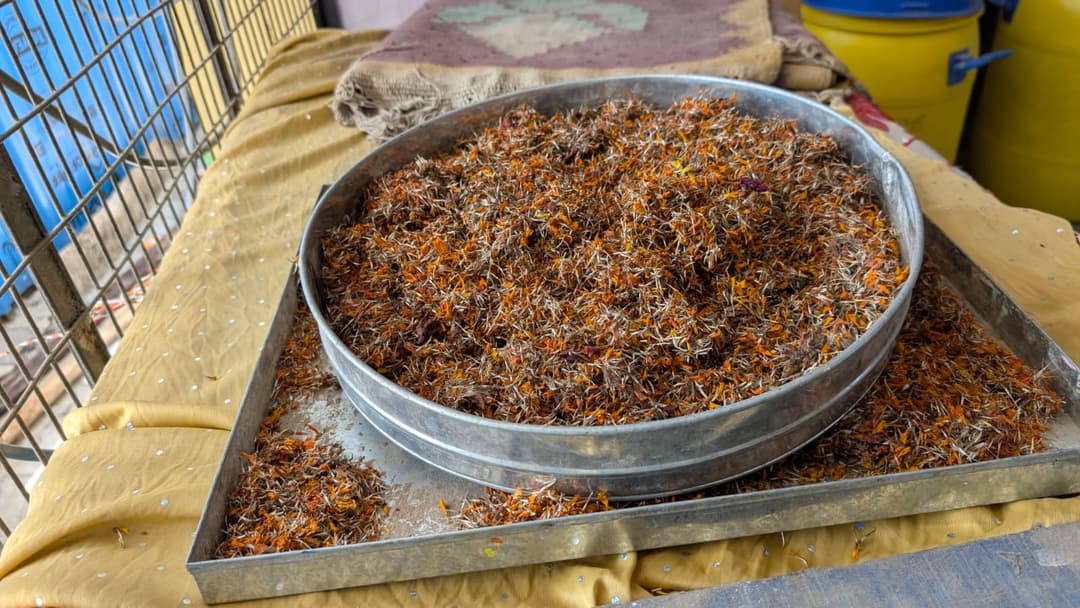
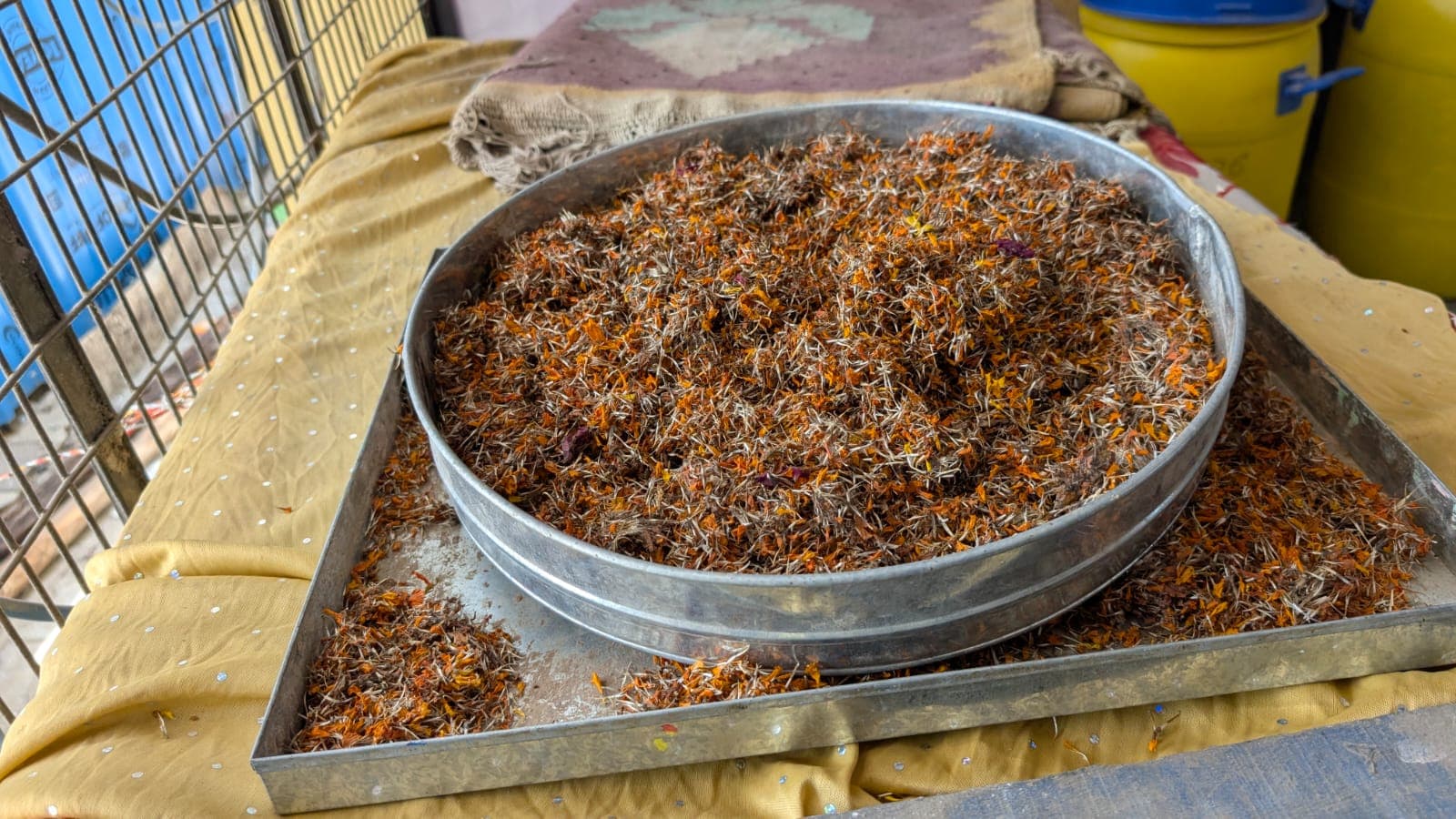
Sacred offerings collected
Temple flowers are collected as a visible material stream before they enter the Amrit Dhara product pipeline.
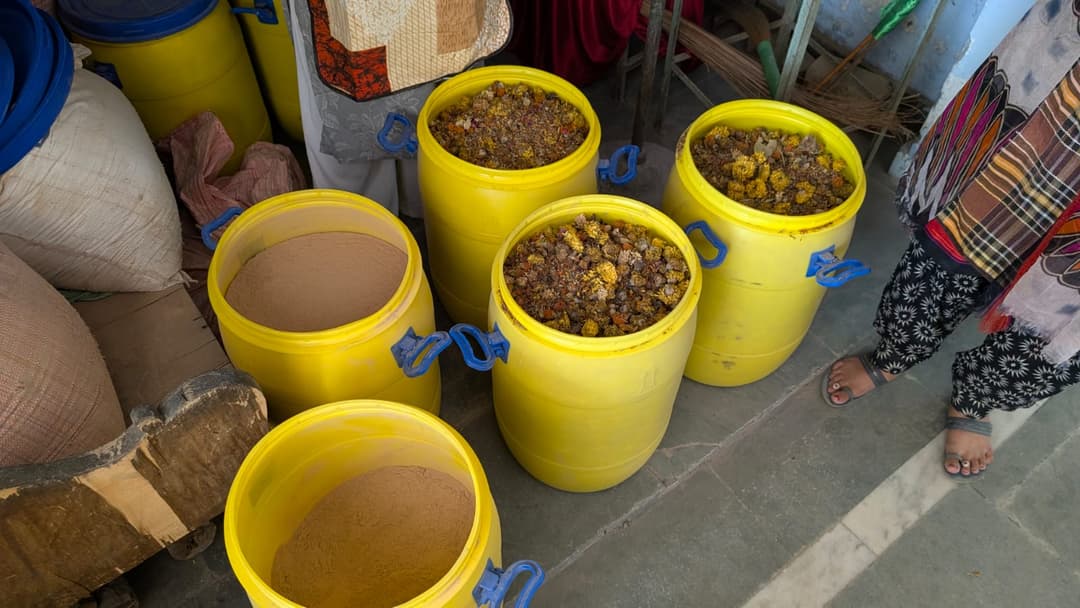
Sorted into clean material streams
Collection barrels separate raw flowers, dried powder, and usable inputs so field proof can stay connected to inventory.
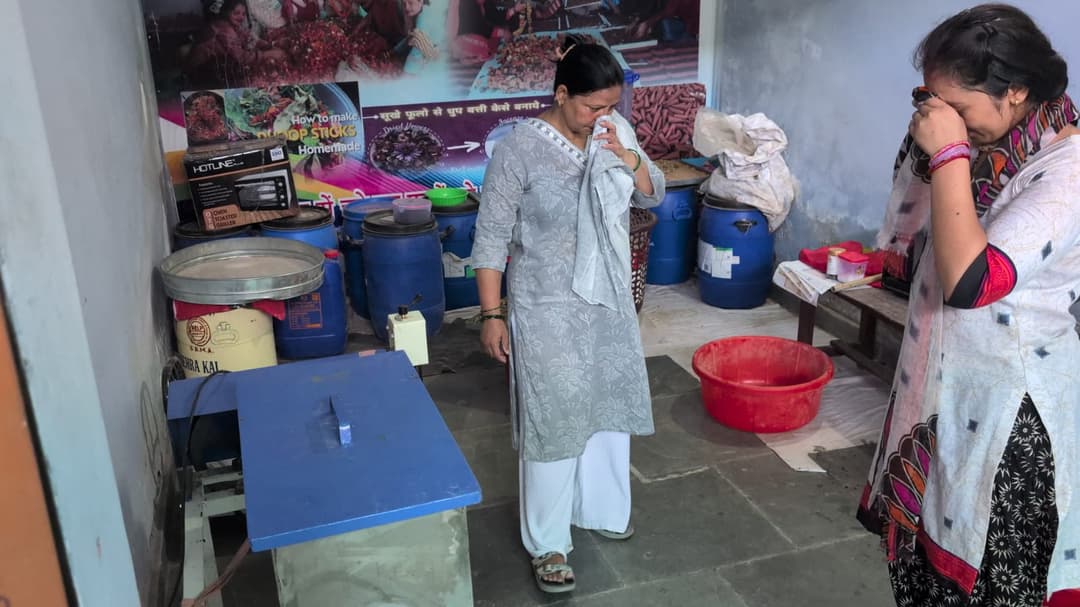
Workshop intake and review
The workshop review stage checks material quality, batch readiness, machinery needs, and livelihood participation.
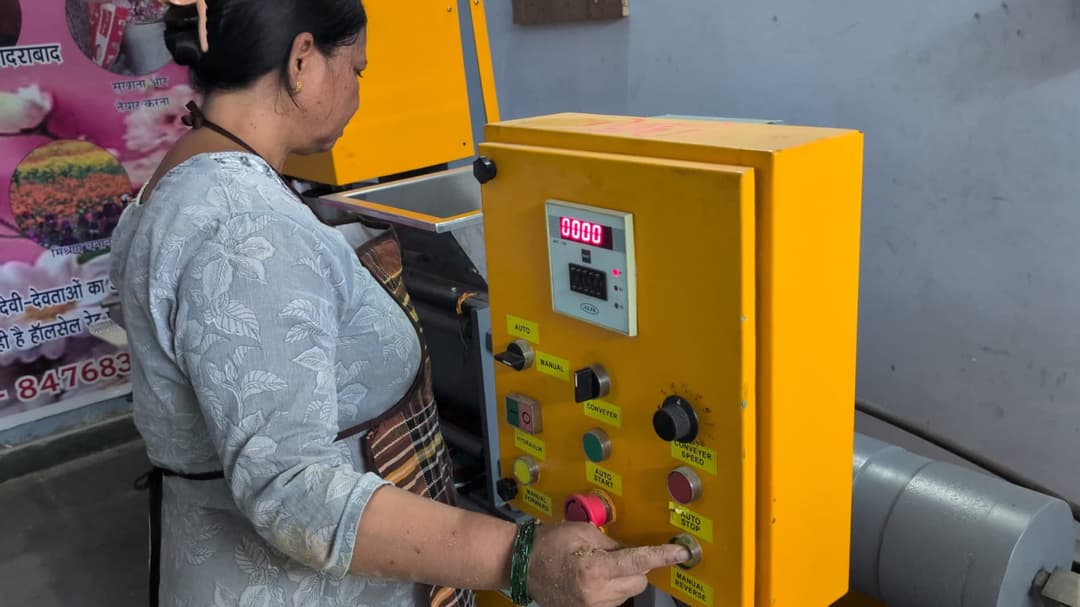
Machine settings calibrated
Controls are checked before production so cone and cup output stays repeatable enough for real sales.
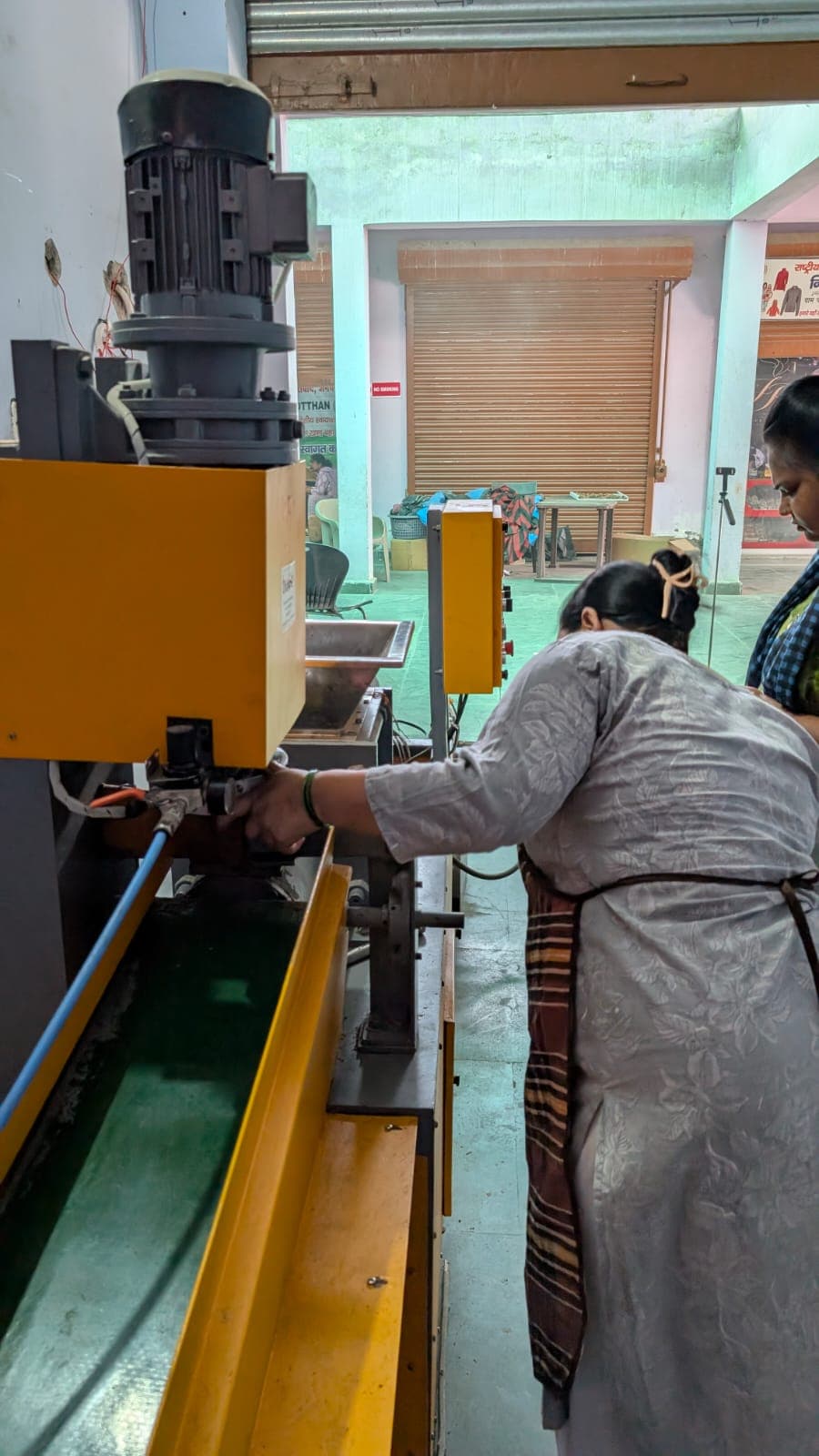
Moulding line operated by trained women
Women-led production turns prepared material into ritual products while keeping the process visible and accountable.
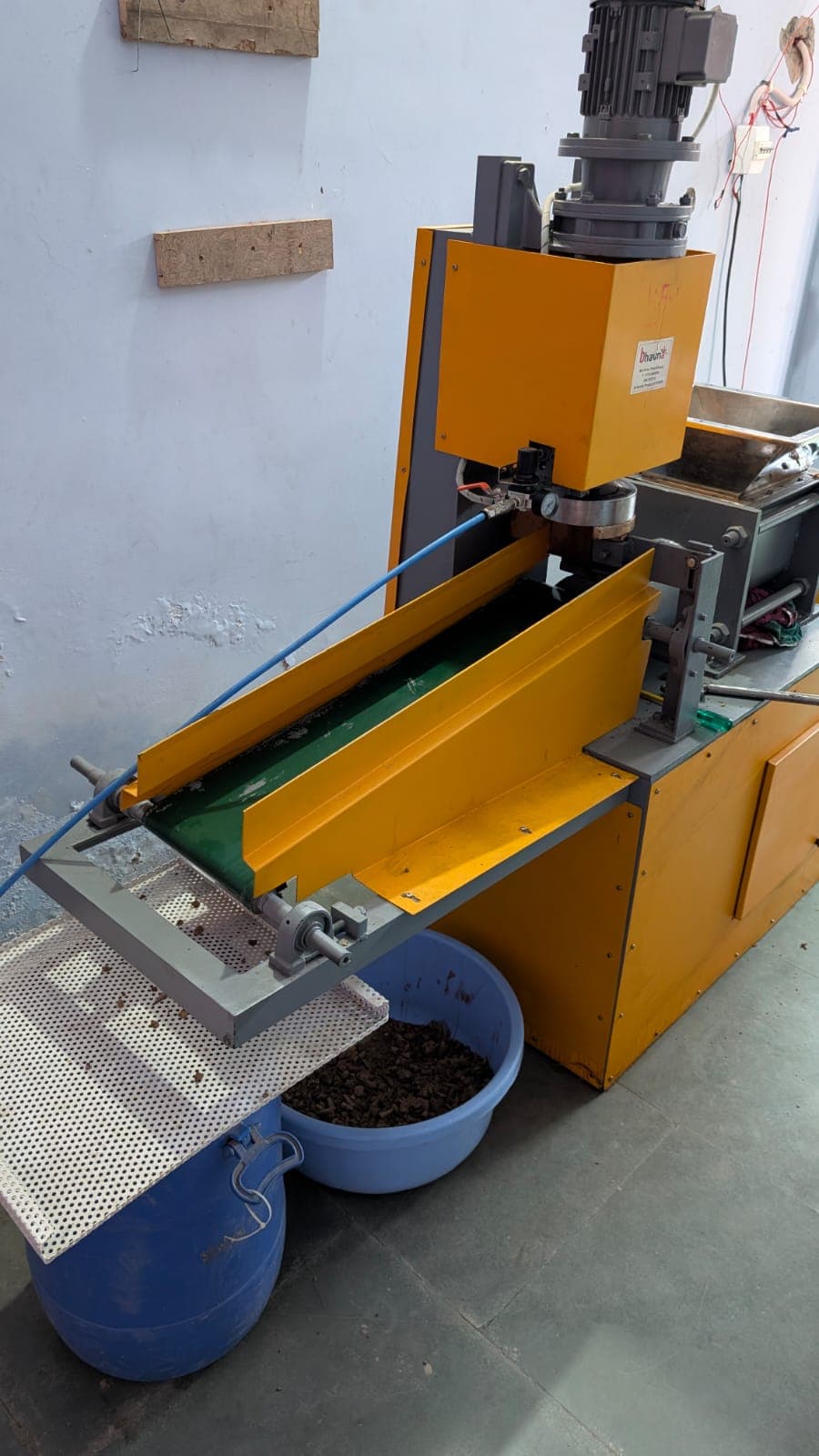
Cone and cup moulding
The moulding machine shapes incense cones and sambrani cups with a cleaner, more repeatable production rhythm.
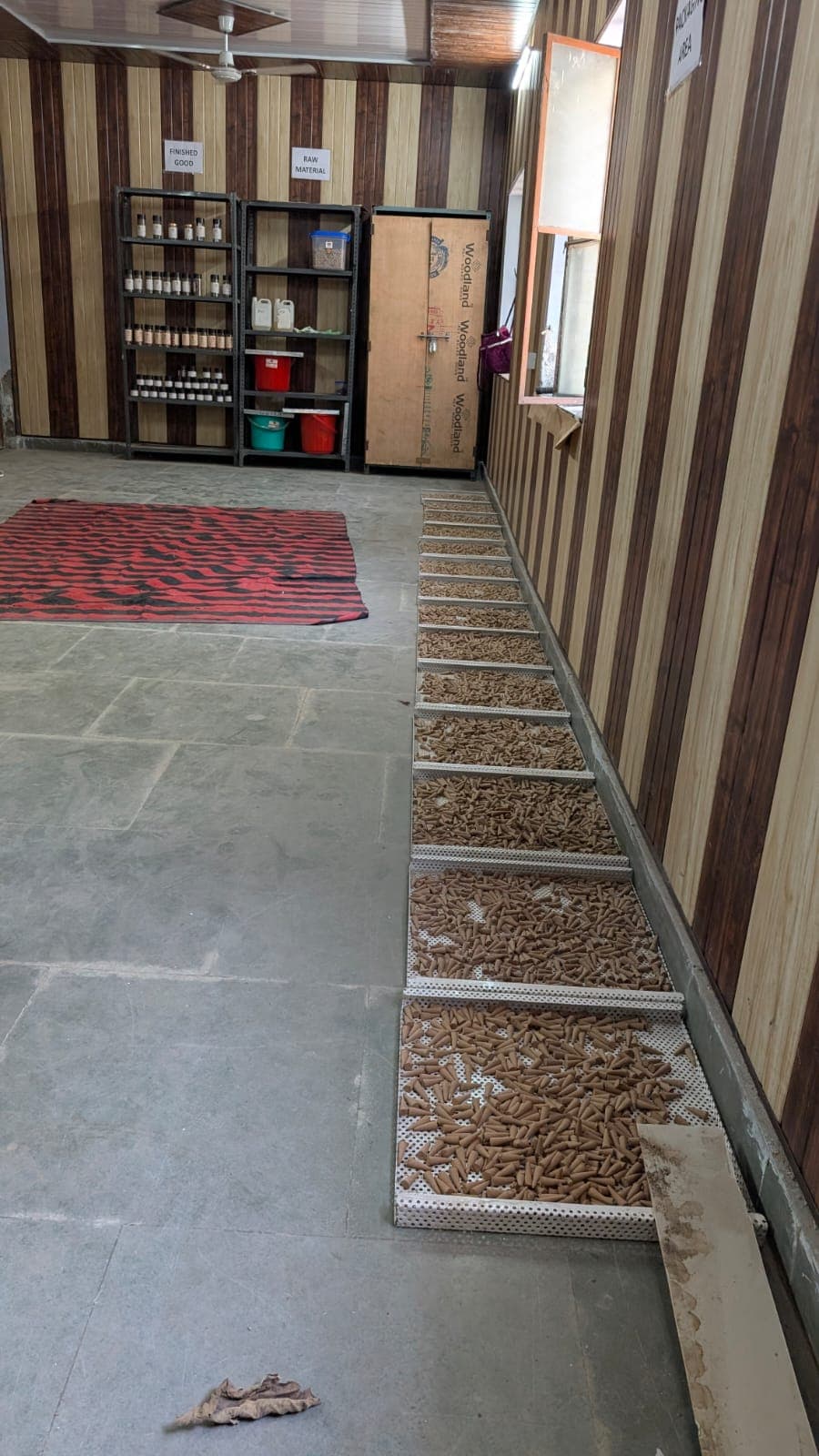
Drying and finishing
Freshly made units are dried on trays, checked for shape and moisture, then moved toward counting and packaging.
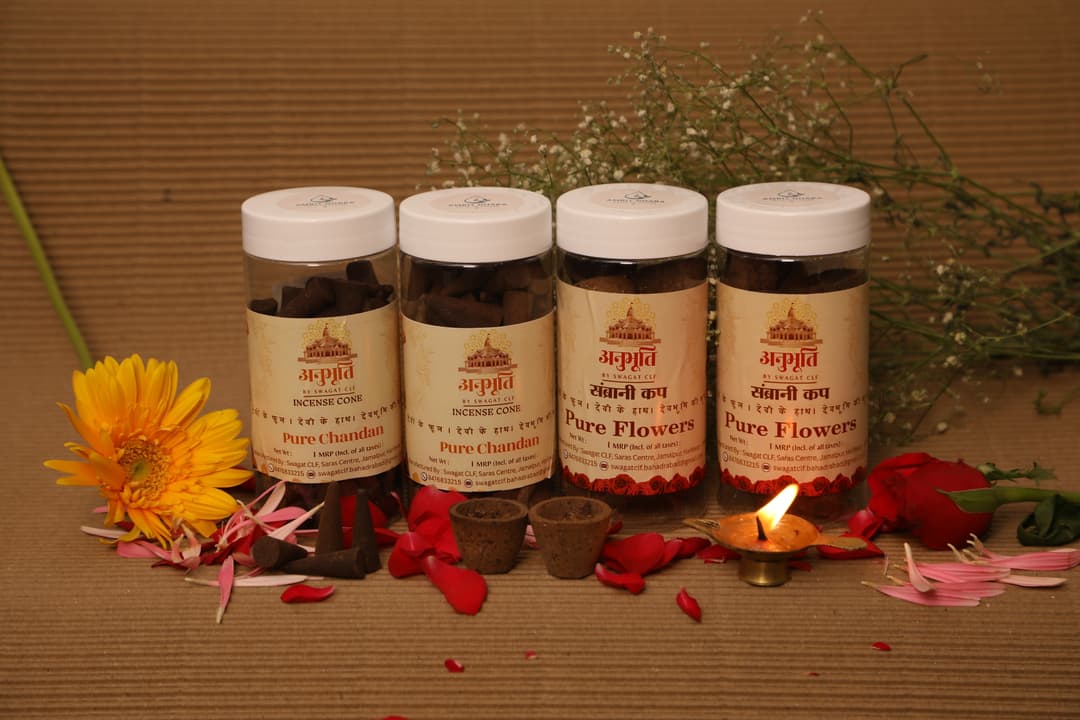
Packaged into ritual combinations
Finished products become the four combinations: incense cones, sambrani cups, one-and-one, and two-and-two packs.
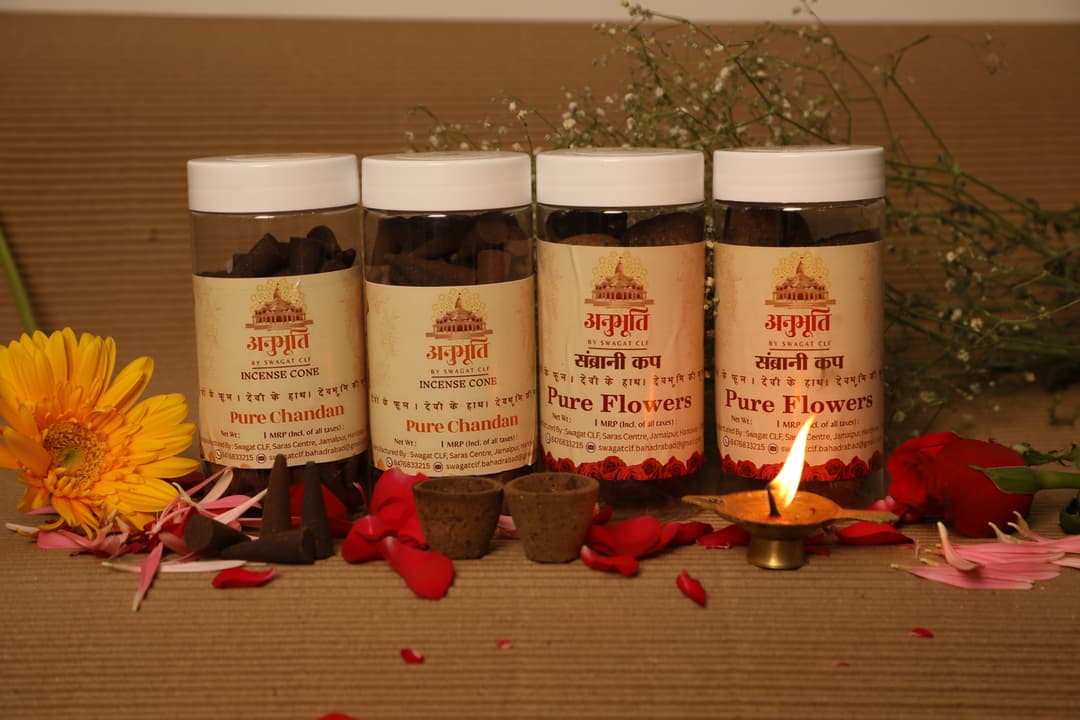
Ready for homes, puja, and gifting
The final product carries the promise forward: sacred offerings renewed, rivers protected, and livelihoods supported.
What connects the photos to data
Field logs, production batches, inventory movements, and report snapshots keep the public story connected to operating records.
Workshop learning stays visible
Drying, grinding, moulding, and quality observations are documented so later trials can build on what worked.
Four sellable combinations
Incense cone, sambrani cup, incense cone plus cup, and two incense cones plus two cups all trace back to this same visible production chain.
The Journey Behind Amrit Dhara
From water testing to source prevention.
Moulik's environmental journey began with research on improving water quality using indigenous plant-based coagulants. While studying ways to clean polluted water, he became increasingly interested in preventing pollution at its source. That exploration eventually led to Amrit Dhara, an initiative that transforms temple flower waste into useful products before it reaches sacred rivers.
Engineering the Process
| Machine | Evidence-backed engineering purpose |
|---|---|
| Controlled tray drying | Reduces weather dependence after sun drying and addresses inconsistent moisture. |
| Pulveriser and sieve | Creates a more consistent particle size before mixing and binding. |
| Mixing and binding | Keeps a documented working binder ratio after cracking was observed with a high flower share. |
| Cone and cup moulding | Shapes the prepared material into the photographed incense-cone and sambrani-cup formats. |
| Drying and quality review | Records shape, moisture, finish, and finished-unit observations before packaging. |
Experiments, observations, failures, and improvements
Source: evidence-backed dossier updated 31 July 2026. These are documented learning records, not claims of awards, scale, or completed production.
Segregation
Experiment / first approach: Mixed material moved into the drying stage.
Observation / failure: Plastic thread, leaves, and unrelated material contaminated drying trays.
Improvement: Use two-bin sorting and take a process photo before transfer.
Drying
Experiment / first approach: Rely on sun drying alone.
Observation / failure: Weather made moisture levels inconsistent.
Improvement: Follow sun drying with controlled tray drying where required.
Pulverising
Experiment / first approach: Process dried material without a consistent particle-size check.
Observation / failure: Particle size varied between batches.
Improvement: Use a pulveriser and sieve check before mixing.
Binding
Experiment / first approach: Use a high flower share in the mix.
Observation / failure: The formed product cracked.
Improvement: Record and reuse the working natural-binder ratio.
Public metrics
Experiment / first approach: Maintain impact figures manually on the public site.
Observation / failure: Public numbers could drift away from the underlying records.
Improvement: Publish only figures with a dated source note and keep internal operating data off public pages.
Replication Toolkit