
From sacred waste to sustainable ritual products.
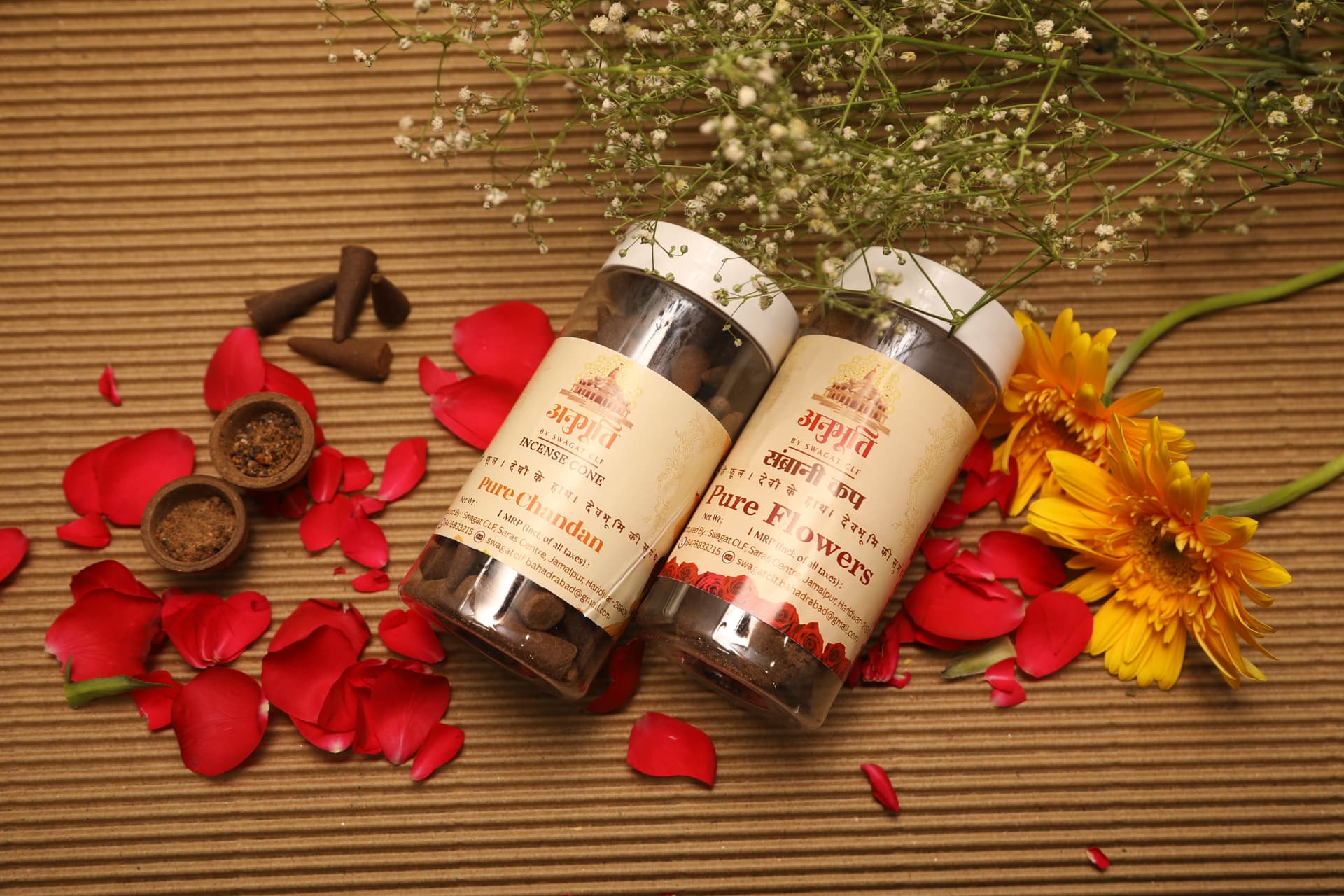
Amrit Dhara collects temple floral offerings, processes them through a disciplined women-led workshop, and turns them into Pure Lavender incense cones and Pure Flowers sambrani cups.
लेजर
Impact reads like a register, not a slogan.
Published figures distinguish collection records from team-reported outcomes. Each figure includes its evidence date and source.
Problem
Sacred waste enters rivers and public spaces.
Flowers offered with devotion often become unmanaged waste. The project begins by respecting that material and giving it a documented second life.
Intervention
Visible circular production.
Collection, sorting, drying, moulding, packaging, inventory, orders, and reports stay connected so impact claims do not drift from evidence.
Livelihoods
12 women-led livelihoods reported
This cumulative figure was supplied by the project team; supporting livelihood records are being reconciled.
Products
6 combinations
Incense cones, sambrani cups, one-and-one combo, and two-and-two family pack are the core revenue line.
धूप · सांब्रानी
Six combinations. One circular product line.
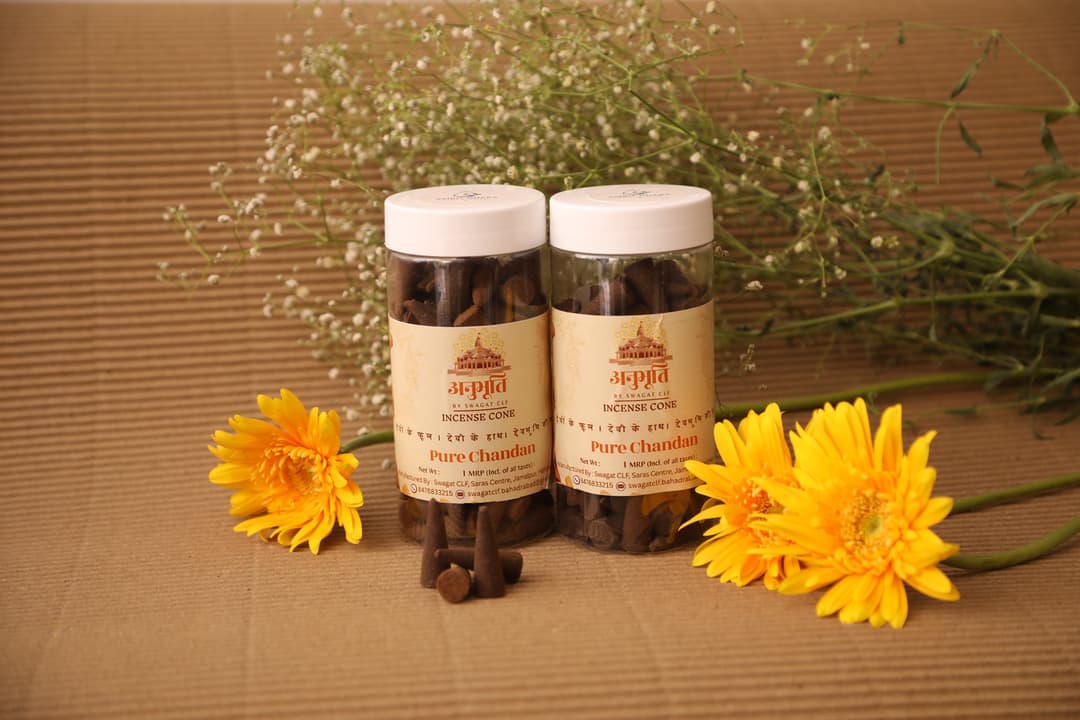
Pure Chandan Incense Cones
2 jars of incense cones
₹240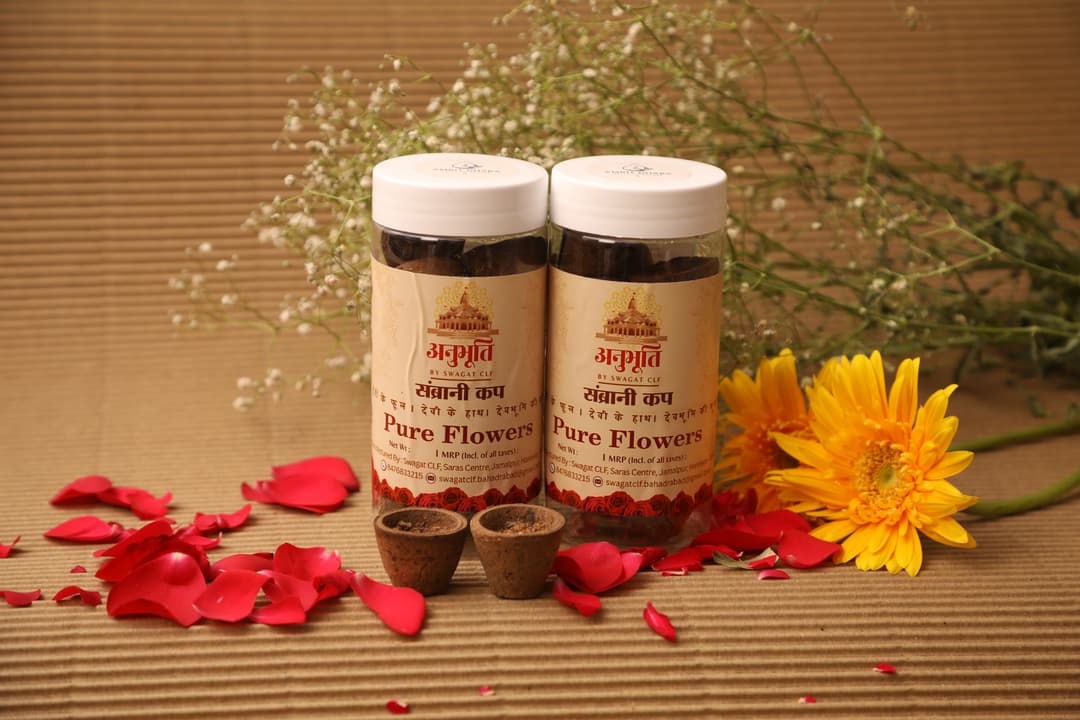
Pure Flowers Sambrani Cups
2 jars of sambrani cups
₹300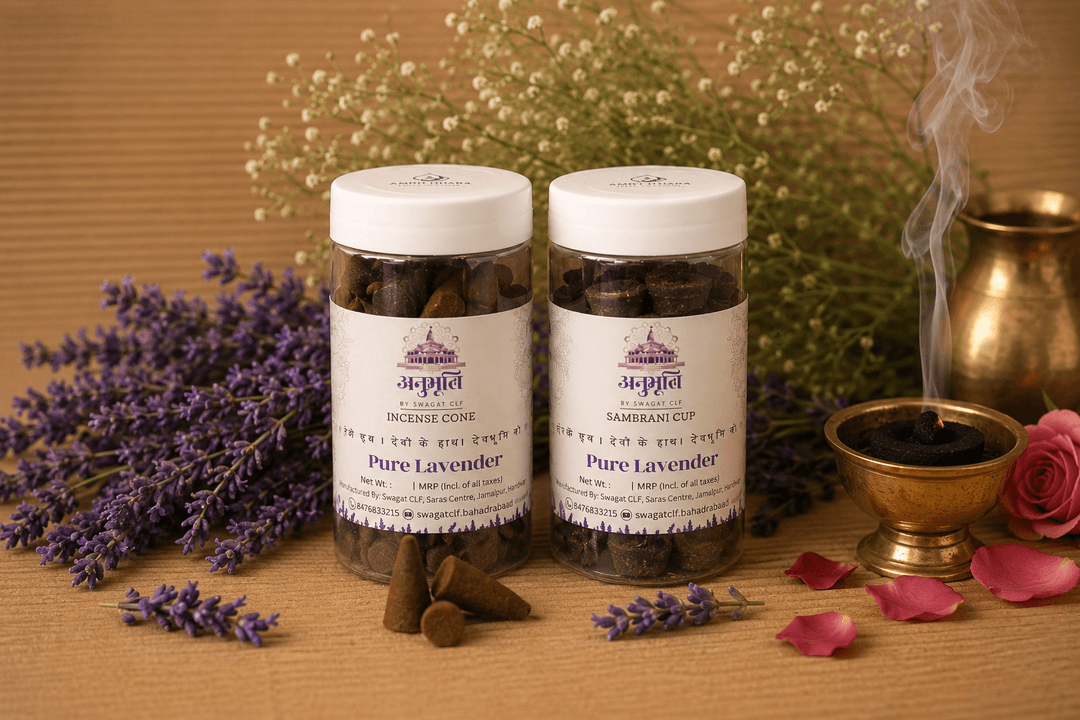
Pure Lavender Incense Cones
2 jars of incense cones
₹240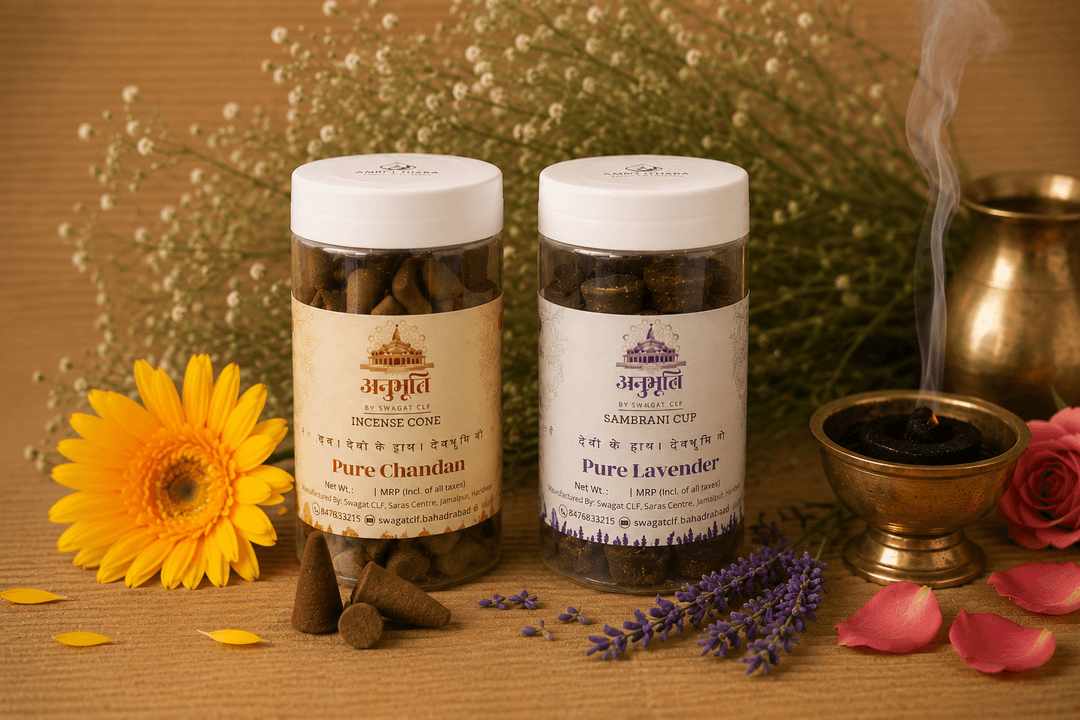
Pure Lavender & Chandan Incense Cones
2 jars of incense cones
₹240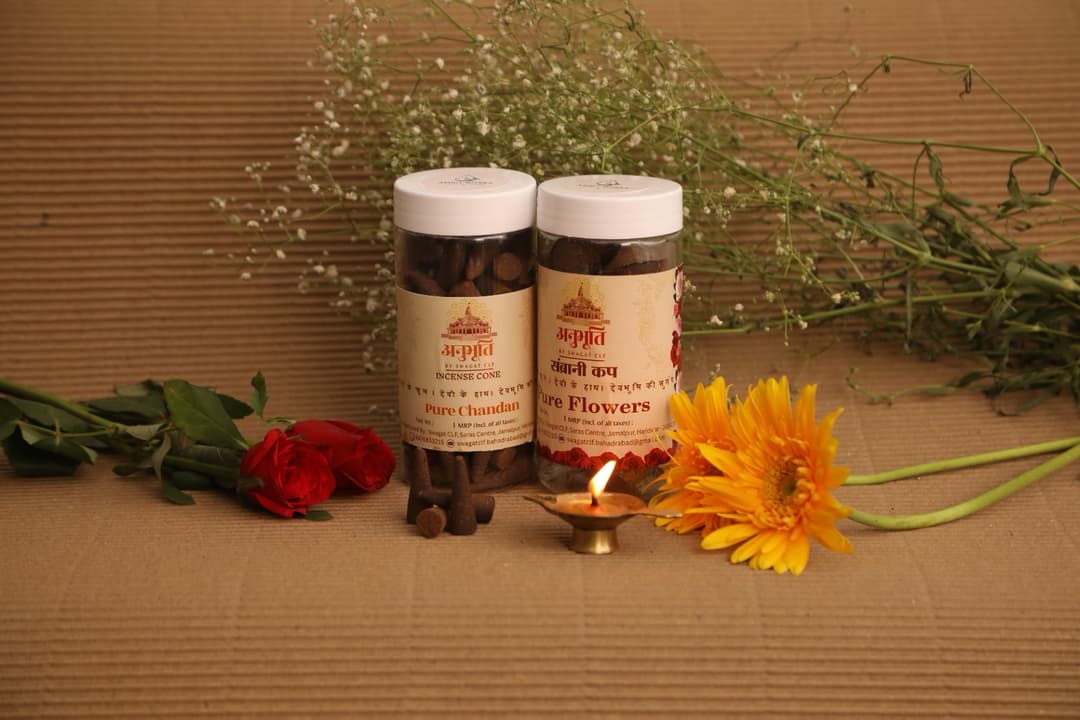
Incense Cone + Sambrani Cup
1 incense cone jar + 1 sambrani cup jar
₹270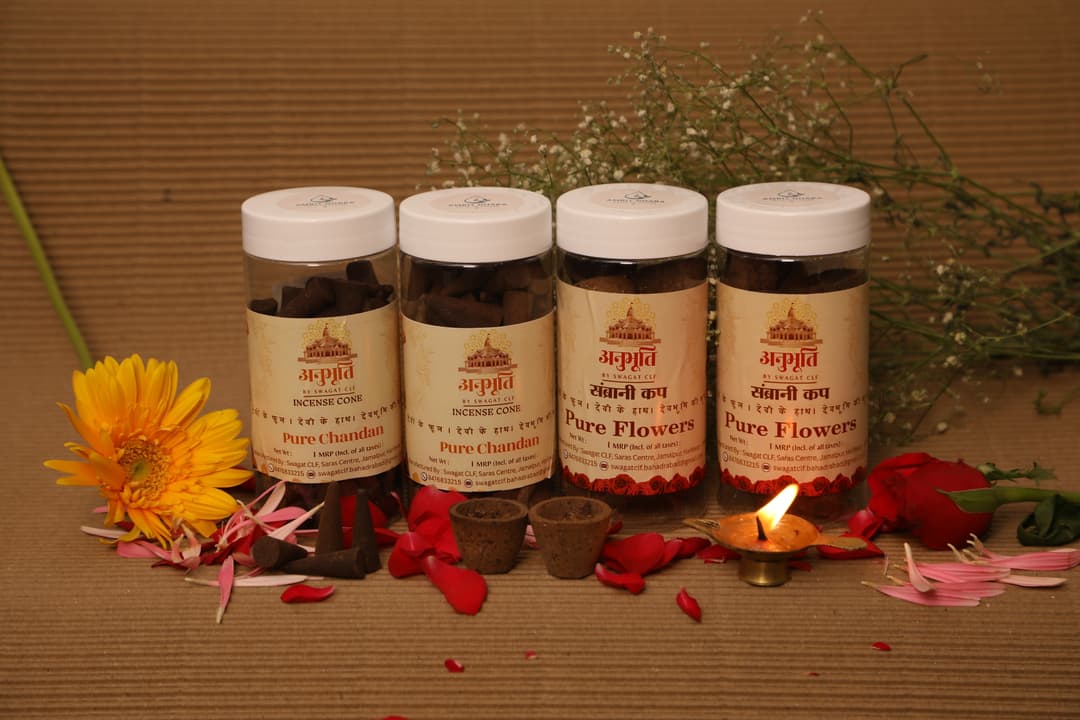
2 Incense Cones + 2 Sambrani Cups
2 incense cone jars + 2 sambrani cup jars
₹540विश्वास
Every product carries visible proof of purpose.
These seals mark the three promises behind each jar: temple-flower recycling, women-led production, and circular value creation.
Temple Flowers Recycled
Sacred offerings are collected, sorted, dried, and transformed into ritual products instead of entering river waste.
Crafted by SHG Women
Women-led production groups help turn recovered flowers into incense and sambrani with dignified livelihood value.
Circular Economy
The product line keeps material in use: nothing wasted, everything valued, and every purchase supporting renewal.
Our Promise
Every product begins as a sacred offering and continues through sustainable transformation.
प्रक्रिया
The full journey, frame by frame.
Collection, drying, moulding, packaging, and inventory are shown through real process photography.
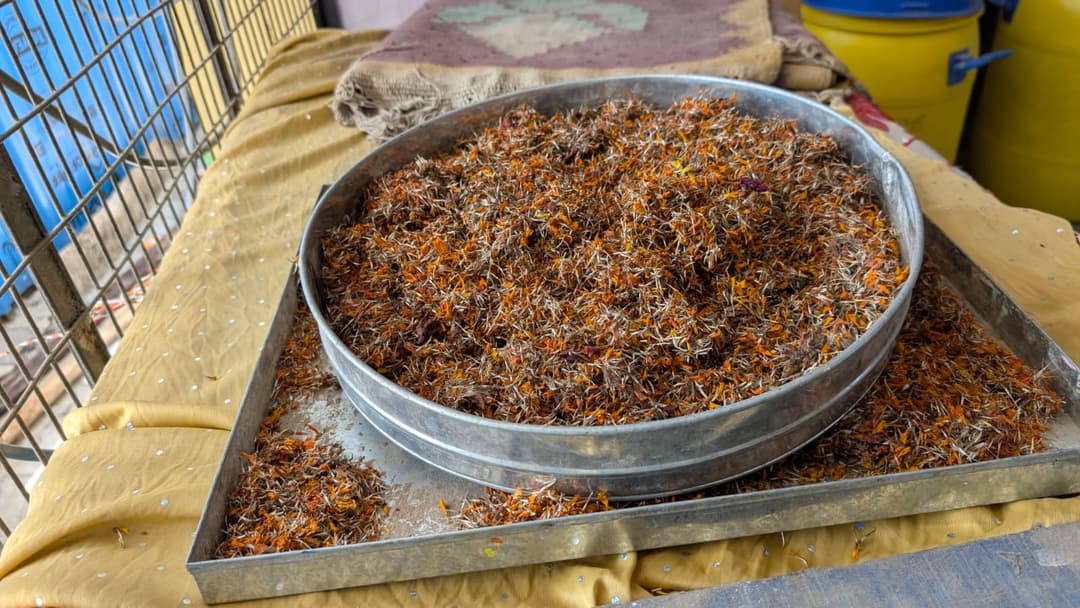
Sacred offerings collected
Temple flowers are collected as a visible material stream before they enter the Amrit Dhara product pipeline.
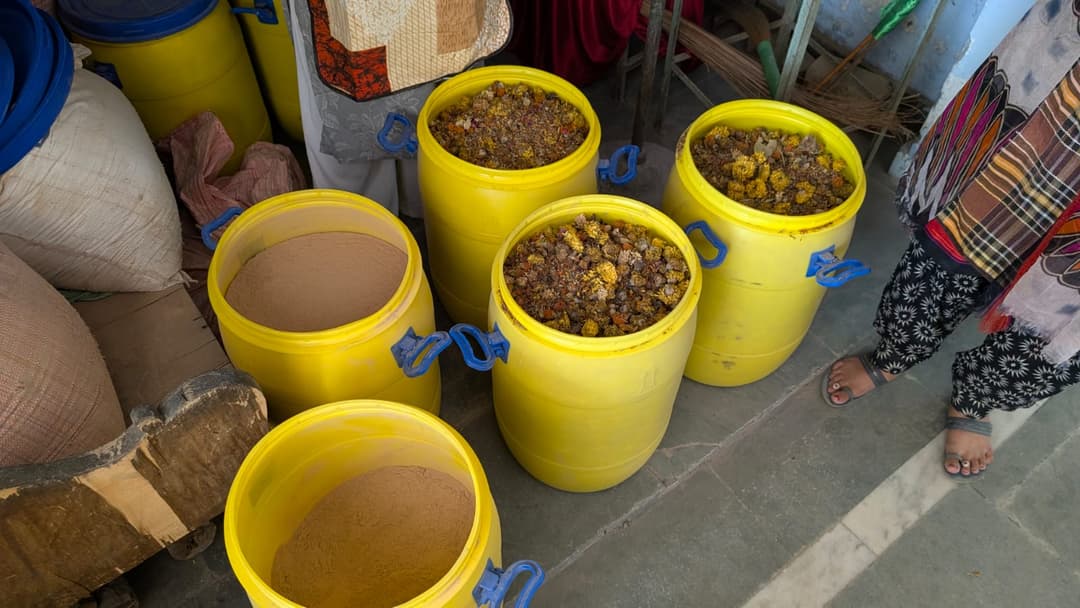
Sorted into clean material streams
Collection barrels separate raw flowers, dried powder, and usable inputs so field proof can stay connected to inventory.
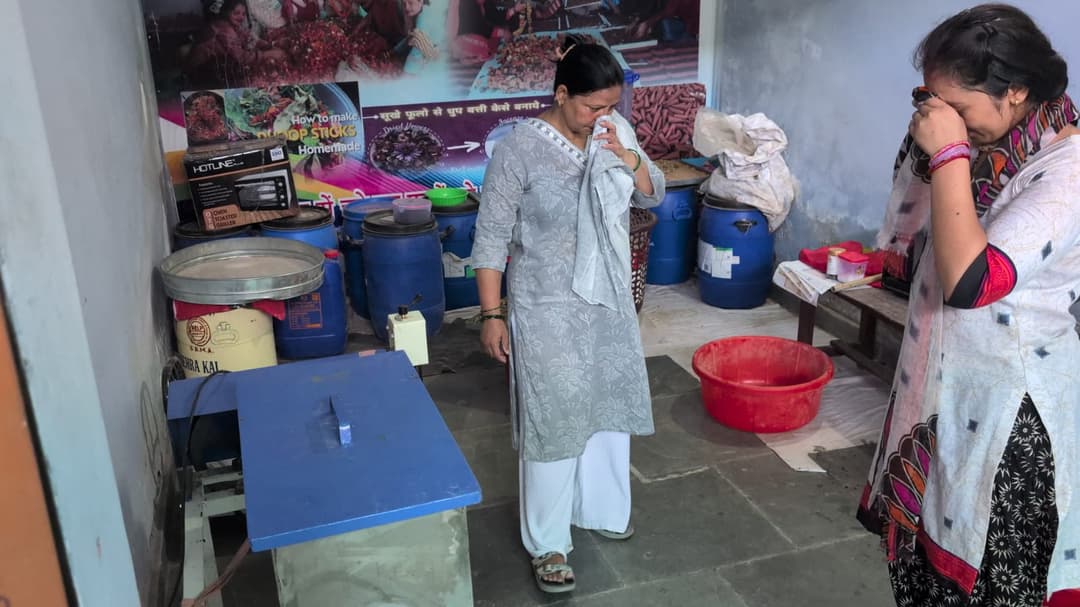
Workshop intake and review
The workshop review stage checks material quality, batch readiness, machinery needs, and livelihood participation.
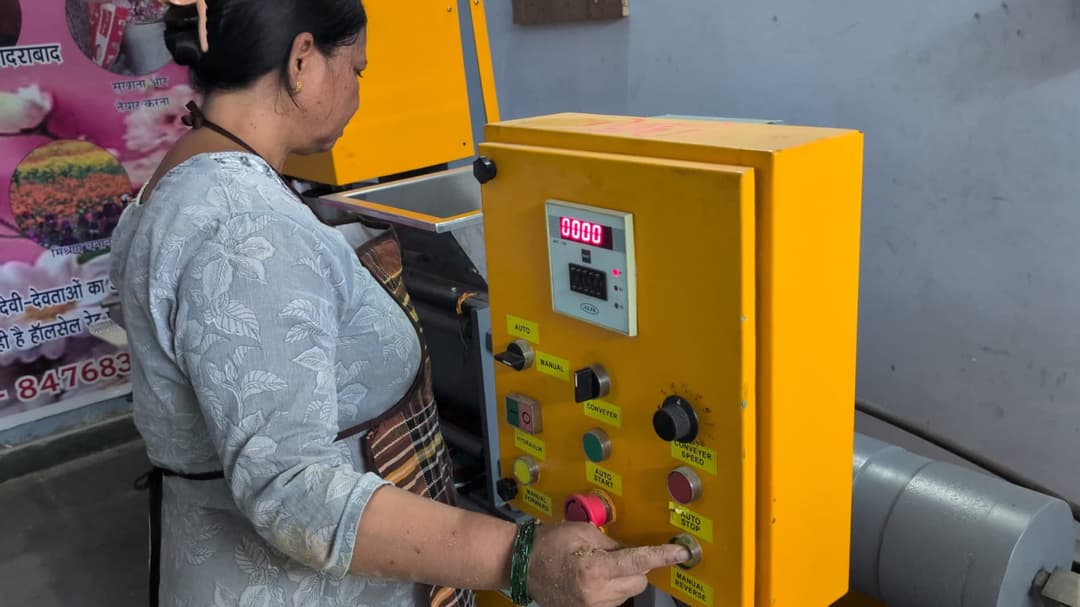
Machine settings calibrated
Controls are checked before production so cone and cup output stays repeatable enough for real sales.
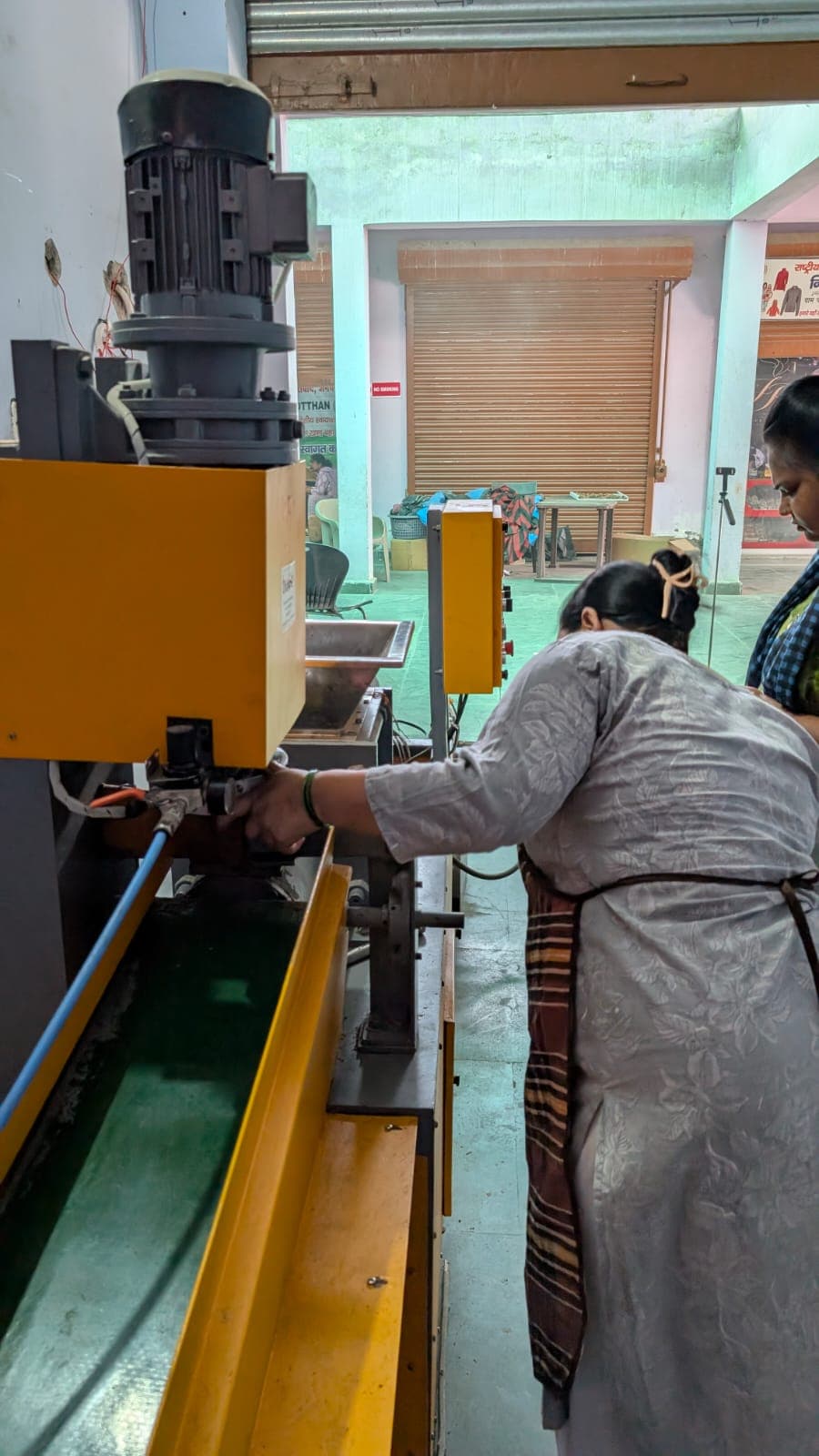
Moulding line operated by trained women
Women-led production turns prepared material into ritual products while keeping the process visible and accountable.
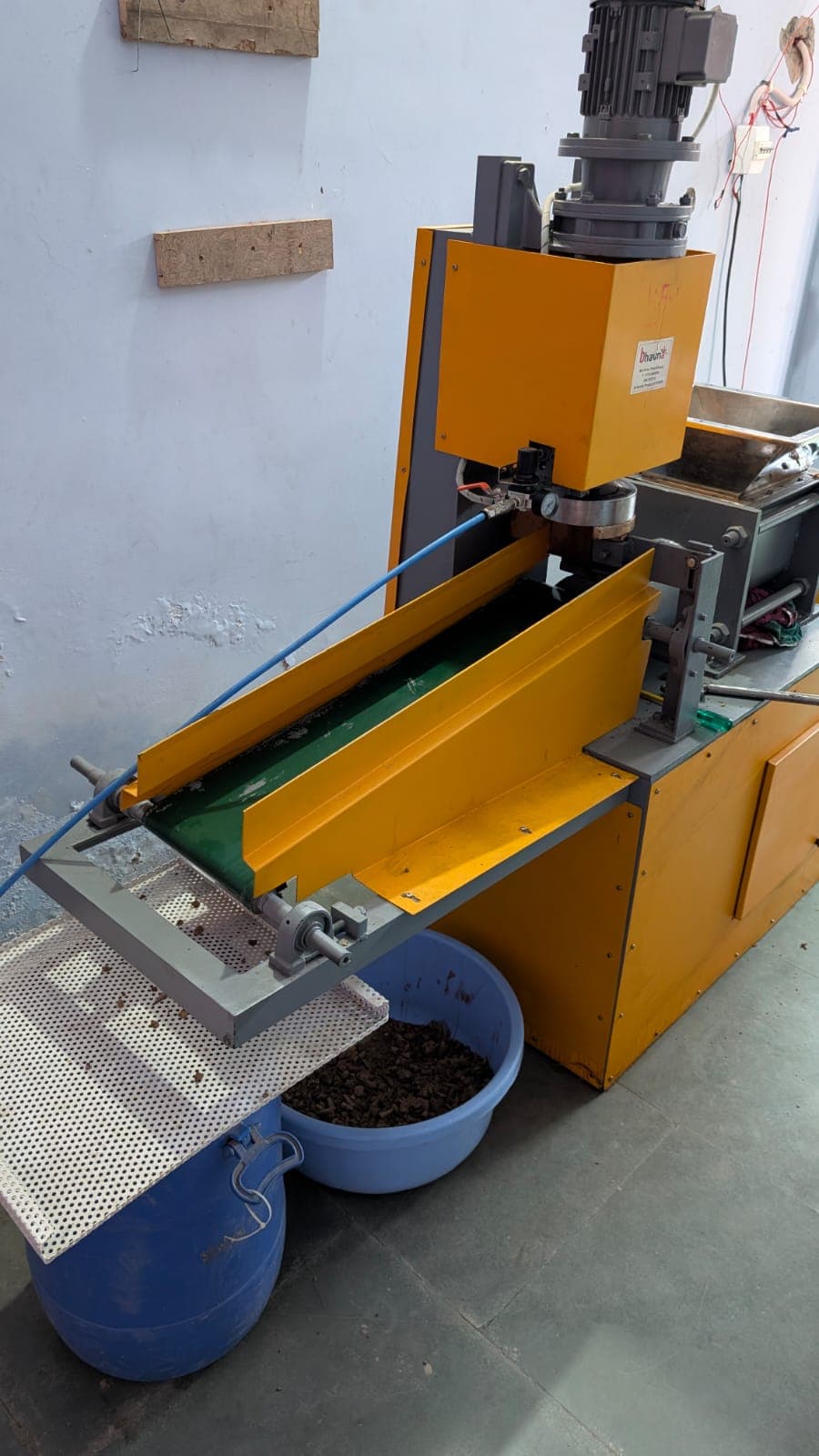
Cone and cup moulding
The moulding machine shapes incense cones and sambrani cups with a cleaner, more repeatable production rhythm.
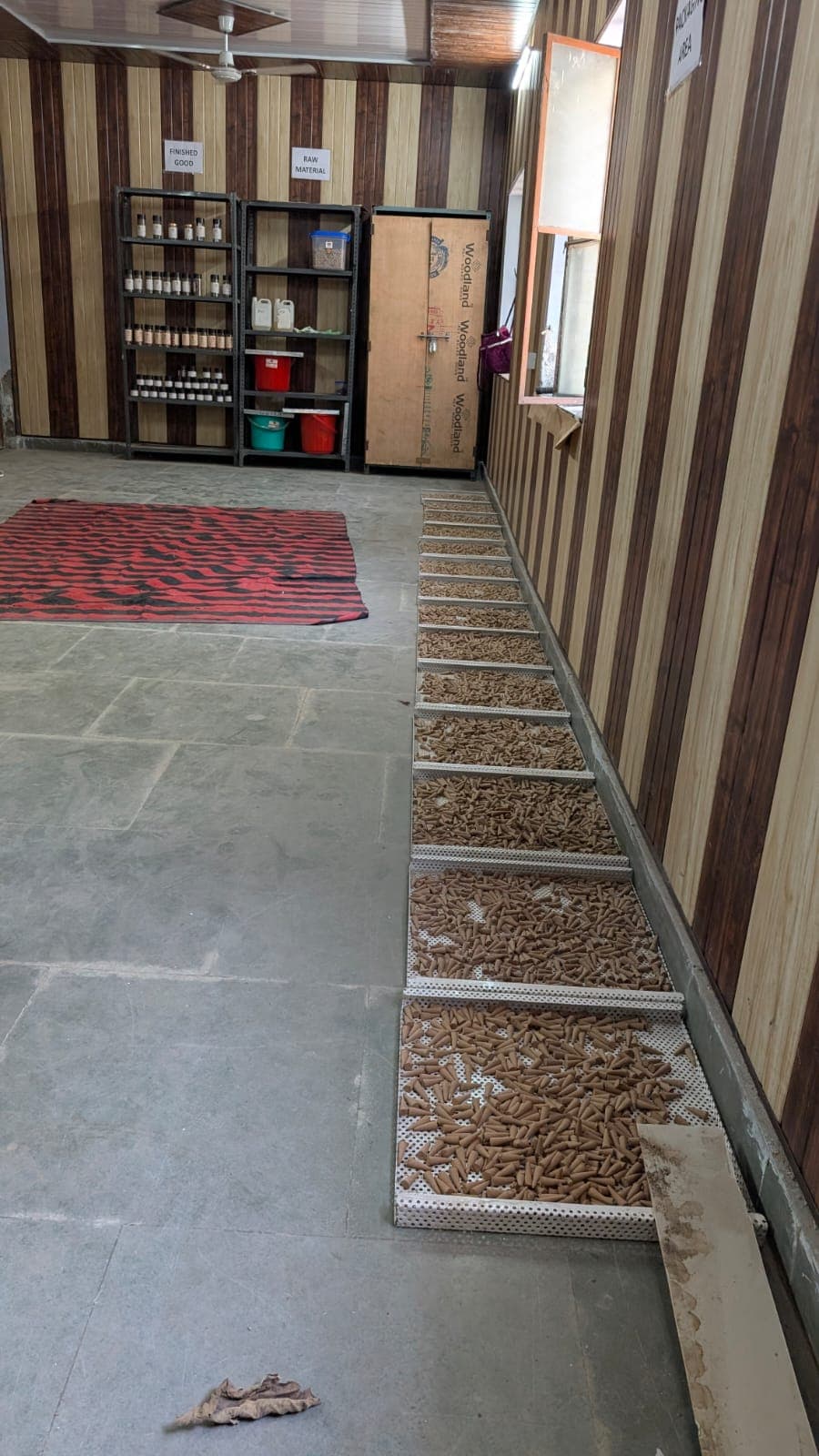
Drying and finishing
Freshly made units are dried on trays, checked for shape and moisture, then moved toward counting and packaging.
Packaged into ritual combinations
Finished products become the four combinations: incense cones, sambrani cups, one-and-one, and two-and-two packs.
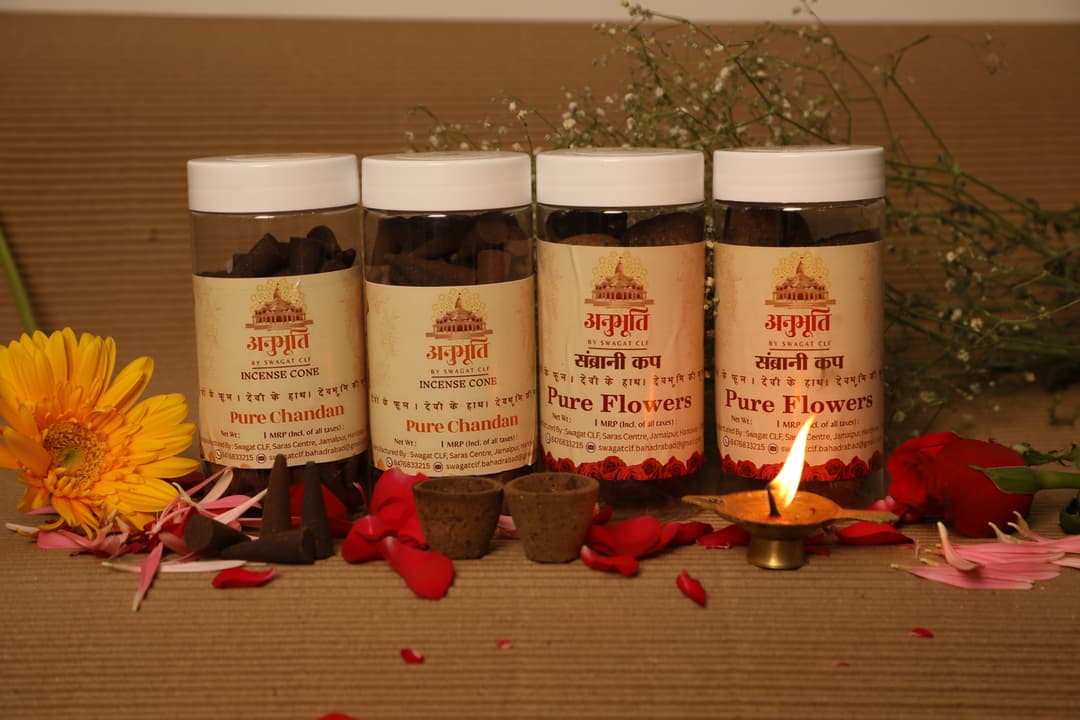
Ready for homes, puja, and gifting
The final product carries the promise forward: sacred offerings renewed, rivers protected, and livelihoods supported.